| Publisher |
Cambridge University Press |
| ISBN-13 |
9781108485654 |
| ISBN-10 |
9781108485654 |
| Binding |
Hardcover |
| Language |
(English) |
| Weight (grms) |
550 |
| Subject |
Legal Reference |
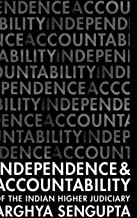
The Supreme Court of India is a powerful institution at the forefront of public attention in India. It is often engaged in a bitter duel with the government on issues as diverse as the administration of cricket in India to whether liquor shops are allowed on highways. Despite such public prominence, very little attention has been paid to who the judges of the Supreme Court are, how they are appointed, transferred and removed, and what they do after retirement. This book provides an account of these four facets of judicial functioning and analyses the processes in operation today. It argues that each of these four aspects gives rise to significant concerns pertaining to judicial independence, accountability, or both. Its main argument is that both judicial independence and accountability are necessary for 'an effective judiciary', and these two values are not in conflict with each other as is commonly assumed.
Arghya Sengupta
Arghya Sengupta was born in Kolkata in 1984. He was educated at St Xavier’s Collegiate School, Kolkata, the National Law School of India University, Bengaluru, and the University of Oxford, where he was a Rhodes Scholar and Lecturer in Law.







Arghya Sengupta
Cambridge University Press