| Publisher |
MANOHAR PUBLISHERS AND DISTRIBUTORS |
| Publication Year |
2026 |
| ISBN-13 |
9788173048319 |
| ISBN-10 |
8173048312 |
| Binding |
Hardcover |
| Number of Pages |
248 Pages |
| Language |
(English) |
| Subject |
Civilization & Culture |
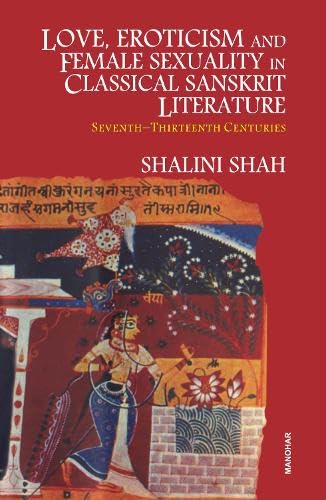
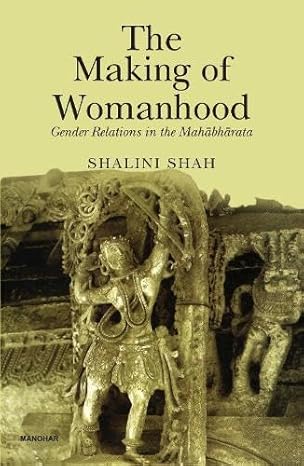
This book is an attempt to analyse the conception of kama in the early-medieval classical Sanskrit literary tradition from a gender perspective. By reading against the grain, the author has tried to illumine the sexual status of women within the different genres of these classical Sanskrit sources. The book highlights that far from being a unitary homogeneous category with only a certain kind of sexual status, women and their sexuality have been conceived differently in different philosophical schools, be they dharmasastra, kamasastra, Lokayata, tantric, ayurvedic and the ascetic philosophies. The author has further made a case for seeing the prostitute sexuality differently from that of a kulavadu, i.e. a household woman. The treatment of the sexual desire of mayavinis, raksasis, dakinis, and svairinis too places them in an all-together different category from the other women of patriarchy. This book also argues in favour of the validity of talking in terms of love (prema) tradition in contra-distinction to an erotic (srngari) tradition in the classical Sanskrit sources of the early medieval period. The basis for this binary division is predicated on the fact that in the love tradition, in which we include the poetry of the female poets, Bhavabhuti’s and Jayadeva's work deals with reciprocity and emotions in the sexual relations between man and woman, while the masculine erotic tradition authored by the srngari poets is marked by hegemonic masculinity in which women exist solely as fetishized objects for exclusively male erotic stimulation. About the Author Shalini Shah, an alumnus of Delhi’s St. Stephen’s College, has had a meritorious academic career throughout. After teaching undergraduate students, first at her alma mater and then at Indraprastha College, for two decades, she joined as a Professor in the Department of History, University of Delhi. She has been elected the Sectional President (Ancient India) for the 82nd session of the Indian History Congress 2023. Her area of specialization is ancient Indian social history and she has worked consistently for over three decades on gender relations. Her scholarly contributions have appeared in many prestigious journals, both nationally and internationally, as well as in several edited books. She has authored several books: The Making of Womanhood: Gender Relations in the Mahabharata, (Manohar, 1995, 2nd revised edition, 2012); Mahabharata: A Book of Quotes (Aryan Books, 2014); Naritva Ka Gathan (Granthshilpi, 2016).
Shalini Shah
Shalini Shah, an alumnus of Delhi's St. Stephen's College, has had a meritorious academic career throughout. After teaching undergraduate students, first at her alma mater and then at Indraprastha College, for two decades, she joined as a Professor in the Department of History, University of Delhi. She has been elected the Sectional President (Ancient India) for the 82nd session of the Indian History Congress 2023. Her area of specialization is ancient Indian social history and she has worked consistently for over three decades on gender relations. Her scholarly contributions have appeared in many prestigious journals, both nationally and inter-nationally, as well as in several edited books. She has authored several books: The Making of Womanhood: Gender Relations in the Mah?bh?rata, (Manohar, 1995, 2nd revised edition, 2012); Mah?bh?rata: A Book of Quotes (Aryan Books, 2014); Naritva Ka Gathan (Granthshilpi, 2016).



Shalini Shah
MANOHAR PUBLISHERS AND DISTRIBUTORS