| Publisher |
PHI Learning |
| Publication Year |
2008 |
| ISBN-13 |
9788120336988 |
| ISBN-10 |
9788120336988 |
| Binding |
Paperback |
| Number of Pages |
352 Pages |
| Language |
(English) |
| Weight (grms) |
499 |
| Subject |
Poverty And Unemploymentpo |
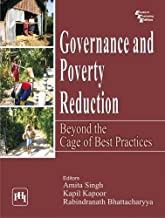
Poverty reduction in South Asia is a precondition for sustaining any form of reforms in governance. The new public management reforms which started in South Asia from Sri Lanka taking the initiative in 1977–78 have been a decisive break from the previously practised State driven protectionist system. Investment in the region has been rising and even per capita income has shown some increase, yet the state has not been able to lead these reforms appropriately and efficiently. Thus poverty has not been reduced, ordinary people continue to languish under government programmes and the socially excluded remain outside the mainstream decision making bodies. Governance in South Asia faces the single most important challenge of poverty reduction which continues to blunt and disfigure capacity, self esteem and service delivery system to the poor. This book attempts to bring out microlevel studies from many regions in South Asia to address issues of entrepreneurship, knowledge and professionalism. As an initiator of the idea on developing a critique to the straightjacketed ‘best practice’ research, this book questions the standard practice in evaluating administrative reforms as not being the true base for knowledge. Administrators need to balance capacity and control in every implementation programme. Confining to the knowledge of ‘best practices’ may conceal enormous amount of information from the ‘less than best’ practices which may be necessary to sustain good initiatives of public managers. This book highlights areas of active networking, partnerships and collaborations amongst state and non-state bodies, NGOs and specialist Science and Technical Organizations. The true nature of governance is explained and demonstrated through the processes which otherwise pass off undetected in macro-understanding of governance
Amita Singh
Amita Singh is Professor of Law and Governance at the Centre for the Study of Law and Governance, Jawaharlal Nehru University (JNU), New Delhi. She has several books and publications to her credit (including the latest book Administrative Reforms: Towards Sustainable Practices (Sage 2005)) in the area of policy implementation, grass-roots governance and administrative reforms. She serves on the Board of Research Committee 4 on Bureaucracy in International Political Science Association (IPSA). She is the serving Academic Advisor to NAPSIPAG (Network of Asia Pacific Schools and Institutes of Public Administration and Governance). She is the Project Director of 'Governance Knowledge Centre' of the Department of Administrative Reforms and Public Grievances (DARPG). She was awarded the National Legal Services Authority (NALSA) Award 2007 and Millennium Award for Women in Public Services 2007. Nasir Aslam Zahid is currently Dean, Hamdard School of Law at the Hamdard University, Karachi. Formerly Chief Justice of Sindh High Court and later judge of the Supreme Court of Pakistan, he is known for resigning from the Supreme Court instead of taking oath of the office in accordance with General Pervez Musharraf's Provisional Constitutional Order (PCO). He has had a very long distinguished career in adjudicating on issues of the poor in governance and prison reforms.








Amita Singh
PHI Learning