| Publisher |
Suzeteo Enterprises |
| Publication Year |
2020 |
| ISBN-13 |
9781645940937 |
| ISBN-10 |
9781645940937 |
| Binding |
Hardcover |
| Number of Pages |
150 Pages |
| Language |
(English) |
| Dimensions (Cms) |
13.97 x 1.27 x 21.59 |
| Weight (grms) |
91 |
| Subject |
Literature & Fiction |
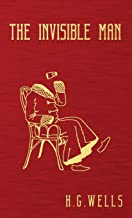
From four-time nominee of the Nobel Prize in Literature, The Invisible Man is a science fiction novel by H. G. Wells considered to be influential in helping to establish Wells' status as the "father of science fiction." Wells was an influential social critic with an eye for the future. He wrote many novels and short stories that made commentary on what society would be like in his progressive vision of the world. Though his works imagined things such as alien invasions, time travel, and human experimentation, Wells is known for his predictive stories of space travel and technology like the World Wide Web.
In The Invisible Man, a scientist who is devoted to researching optics invents a way to become invisible through neither absorbing nor reflecting light. After becoming an invisible man, Griffin dresses in long-sleeved coats and gloves, keeping his face hidden by bandages and a wide-brimmed hat in order to disguise his invisibility. During a snowstorm, he stays at a local inn owned by Mr. and Mrs. Hall, who find him extremely odd and reserved. When Griffin begins to run out of money and accidentally reveals his invisibility to his landlady, things start changing for him.
H. G. Wells
Born in Bromley in Kent, England, Herbert George “H. G.” Wells (1866-1946) has been called the father of science fiction. His most notable works include the War of the Worlds (1897), the Time Machine (1895), the Invisible Man (1897), and the Island of Doctor Moreau (1896). Wells also wrote on topics related to history and social commentary and was involved in politics for much of his life. Novels like Kipps and the History of Mr. Polly, which describe lower-middle-class life, led to the suggestion that he was a worthy successor to Charles Dickens. After living through two World Wars and seeing Orson Welles’ broadcast of the War of the Worlds strike panic in listeners, Wells died in London on August 13, 1946. The Invisible Man remains a remarkable work of science fiction, revealing the destructive effects science can have on humanity.











H. G. Wells
Suzeteo Enterprises