| Publisher |
Bloomsbury Publishing India Pvt. Ltd. |
| Publication Year |
2019 |
| ISBN-13 |
9789388912013 |
| ISBN-10 |
9789388912013 |
| Binding |
Paperback |
| Number of Pages |
212 Pages |
| Language |
(English) |
| Weight (grms) |
590 |
| Subject |
Islamism |
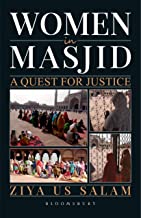
Why do we not see Muslim women heading to a mosque for prayers on Fridays?
Why don't they participate in funeral prayers in the Indian subcontinent?
Men and women pray at al-Masjid al-Haram in Mecca. They pray in Al Masjid al Nabavi in Medina. Why cannot they pray in their neighbourhood mosques in India?
Islam does not discriminate between men and women. The Quran promises as much reward for a roza (fast), a Hajj or an act of charity for a woman as a man. At nearly 60 places, it asks both men and women to establish prayer, as opposed to merely offering prayer. Establishing prayer, scholars agree, is done through congregation. Men do it by praying in mosques. But what about women? They are denied the right to enter mosques across the Indian subcontinent.
Ziya Us Salam
Ziya Us Salam is a noted literary and social commentator. A student of history from the University of Delhi, he is engaged in building bridges of commonality between communities through recourse to the Quran and the Vedas.He has been associated with The Hindu for almost two decades and has been its Features Editor for North India editions for 16 years. At present, he is an Associate Editor, Frontline, and writes on sociocultural issues for the magazine besides doing book reviews.




Ziya Us Salam
Bloomsbury Publishing India Pvt. Ltd.