
Availability: Available
Shipping-Time: Usually Ships 5-9 Days
0.0 / 5
| Publisher | Sterling Publishers Pvt Ltd |
| ISBN-13 | 9788194400790 |
| ISBN-10 | 8194400791 |
| Binding | Paperback |
| Number of Pages | 224 Pages |
| Language | (English) |
| Subject | Classic Fiction |
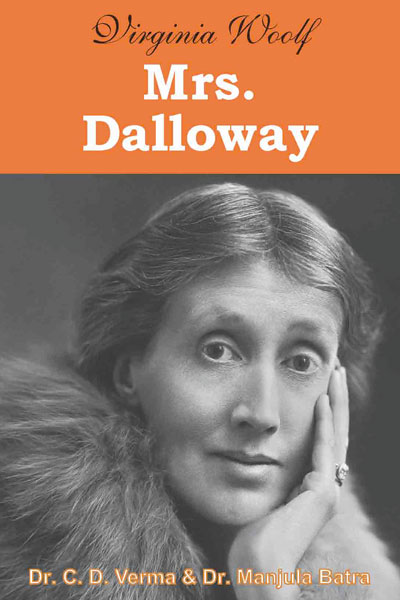
Mrs. Dalloway by Virginia Woolf details a day in the life of Clarissa Dalloway in post-World War I England. Clarissa visits London in the morning, getting ready to host a party that evening. The nice day reminds her of her youth and makes her wonder about her choice of husband. She married the reliable Richard Dalloway instead of the enigmatic and demanding Peter Walsh and she “had not the option” to be with Sally Seton, for whom she felt strongly. Peter re-introduces these conflicts by paying a visit that morning, having returned from India. Clarissa’s party in the evening, attended by most of the characters including people from her past, is a gradual realisation dawning on her consciousness. Virginia Woolf, a modernist 20th century English novelist, was considered a pioneer in the use of stream of consciousness as a narrative device. It refers to a mode of narrative that follows the line of a character’s thoughts as they occur. Her novels, through their non-linear approaches to narrative, exerted a major influence on the genre. She is best known for her novels like Mrs. Dalloway (1925) and To the Lighthouse (1927). Through such novels she became, with James Joyce and William Faulkner, one of the three major English language Modernist experimenters in stream of consciousness writing.

Dr. C. D. Verma
,Dr. Manjula Bhatra
Sterling Publishers Pvt Ltd