| Publisher |
OM BOOKS INTERNATIONAL |
| Publication Year |
2026 |
| ISBN-13 |
9789363954281 |
| ISBN-10 |
9363954285 |
| Binding |
Paperback |
| Number of Pages |
304 Pages |
| Language |
(English) |
| Weight (grms) |
240 |
| Subject |
Classic Fiction |
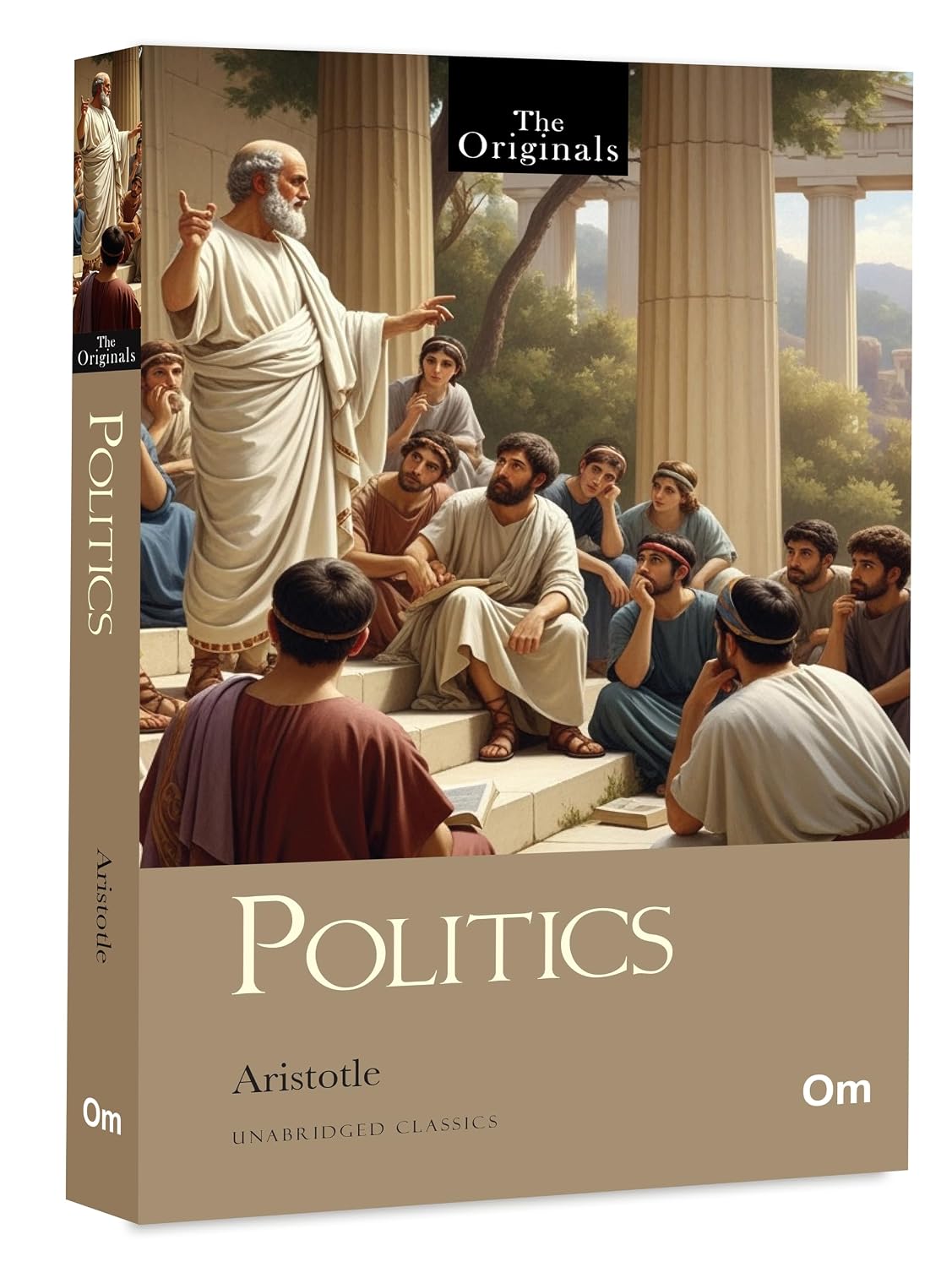
What makes a good life—and what kind of city makes it possible? In Politics, Aristotle turns his formidable intellect from the study of the individual soul to the life of the community. Written in the 4th century BCE yet still astonishingly relevant, this masterwork explores the nature and purpose of the polis—the city-state—as the framework within which human beings can achieve their highest potential. For Aristotle, politics is not merely the art of governance but the pursuit of the good life, grounded in virtue, justice, and shared responsibility. From analyses of constitutions and citizenship to reflections on slavery, property, and education, Politics is both a practical guide to civic organization and a profound meditation on human flourishing. Whether read as philosophy, political theory, or timeless moral inquiry, Politics remains one of the foundational texts of Western thought. It challenges readers to ask: What should a just society look like? What duties do citizens owe to one another? And how can reason and ethics shape the common good? Clear, searching, and humane, Aristotle’s Politics continues to speak to every age that dares to imagine a better polity—and a nobler life.
Aristotle
Ancient Greek philosopher, psychologist, moralist, scientist, metaphysician, and pioneer of formal logic, Aristotle was born in 384 BC in Stagira, Chalcidice, Northern Greece. He lost his parents in his childhood, and moved to Athens at the age of seventeen. There he enrolled in Plato’s Academy where he spent almost twenty years, first as a pupil and then as a teacher and writer. Of the dialogues he wrote, only fragments survive. Physics—a work on Western science and philosophy; Metaphysics—a book examining existence; Nicomachean Ethics—a book on Aristotelian ethics; Politics—a work of political philosophy; De Anima (On the Soul); and Poetics—a philosophical treatise on literary theory; are among his important treaties. Poetics is his first extant work of dramatic theory. It has been guiding playwrights for centuries now, and still continues to remain a powerful benchmark for literary evaluation. Poetics and Rhetoric are Aristotle’s remarkable contributions to literary criticism. He continues to remain a notable intellectual figure of Western history.



Aristotle
OM BOOKS INTERNATIONAL