| Publisher |
Digireads.com |
| Publication Year |
2005 |
| ISBN-13 |
9781420925135 |
| ISBN-10 |
9781420925135 |
| Binding |
Paperback |
| Number of Pages |
80 Pages |
| Language |
(English) |
| Dimensions (Cms) |
15.24 x 0.48 x 22.86 |
| Weight (grms) |
126 |
| Subject |
Political Ideologies |
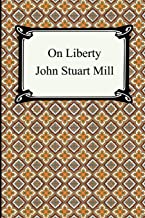
In "On Liberty", John Stuart Mill begins by writing, "The subject of this essay is not the so-called 'liberty of the will', so unfortunately opposed to the misnamed doctrine of philosophical necessity; but civil, or social liberty: the nature and limits of the power which can be legitimately exercised by society over the individual." It is this concept that is at the heart of this work. John Stuart Mill eloquently ponders the question of where the line should be drawn between the freedom of individuals and the authority of the state. As he puts it, "The struggle between liberty and authority is the most conspicuous feature in the portions of history with which we are earliest familiar.
John Stuart Mill
John Stuart Mill was a British philosopher, economist, and social reformer, influential in liberal philosophy. He contributed to ethics, political theory, and economics, advocating individual liberty, freedom of speech, and gender equality. His major works include ‘On Liberty’, ‘Utilitarianism’, and ‘The Subjection of Women’. Mill emphasized rational debate, personal freedom, and social progress, arguing that society thrives when individuals pursue their own paths while respecting others’ rights. His ideas remain central today.











John Stuart Mill
Digireads.com