| Publisher |
Tulika Books |
| Publication Year |
2020 |
| ISBN-13 |
9788193732991 |
| ISBN-10 |
8193732995 |
| Binding |
Hardcover |
| Number of Pages |
430 Pages |
| Language |
(English) |
| Weight (grms) |
1070 |
| Subject |
Literary Theory, History & Criticism |
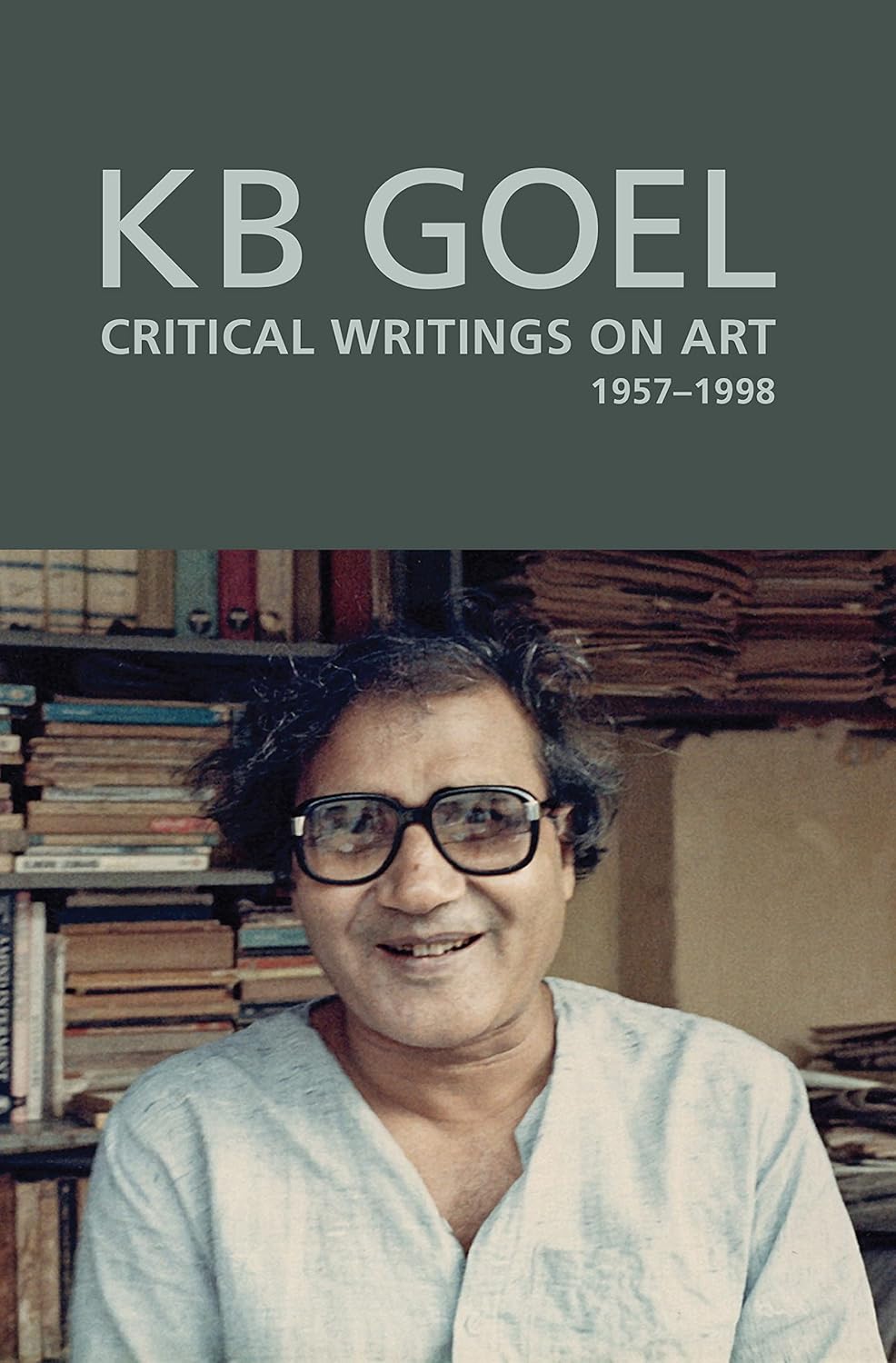
The mapping of the history and trajectory of Indian modern art is a project begun only in recent years and included in it is the recovery of lesser known names and moments from under the shadow of a few dominant ones. Within it, its conscience keeper—art criticism—has borne greater neglect and obscurity. One such voice, heard with considerable attention in its time, was that of the Delhi-based art critic K. B. Goel (1930–2018). Active from the late 1950s to the ’90s, his career broadly coincided with the modernist period. Active mainly as a reviewer, Goel also wrote lengthy reflective assessments, and his art writings stand out for an interpretative and often theory-based approach that is quite unique to Indian art criticism. Writing on some of the most definitive artists, movements, and styles of twentieth-century Indian art, he bears the distinction of successfully transitioning from his modernist training to theorize on the earliest postmodern developments in Indian art, such as installation art.
This annotated volume seeks to bring together Goel’s major writings, accompanied by a critical introduction that draws attention to his frameworks, concerns, and methodologies. It has a foreword by the eminent art critic Geeta Kapur.
Geeta Kapur
Geeta Kapur is a critic and curator. Her essays are extensively anthologized; her books include Contemporary Indian Artists (1978), When Was Modernism: Essays on Contemporary Cultural Practice in India (2000), Speech Acts (2025), Critic’s Compass: Navigating Practice (forthcoming 2025). She was a founder-editor of Journal of Arts & Ideas, advisory board member of Third Text and Marg. Her curatorial projects include: ‘Dispossession’, Johannesburg Biennale (1995); ‘Bombay/Mumbai’ (co-curator, Ashish Rajadhyaksha), Century City, Tate Modern, London (2001); ‘subTerrain’, House of World Cultures, Berlin (2003); ‘Aesthetic Bind’, Chemould Prescott Road, Mumbai (five exhibitions, 2013–14). She is a Trustee of the Sher-Gil Sundaram Arts Foundation (SSAF), Delhi, and general editor of the Art Documents series published by SSAF–Tulika Books.
Geeta Kapur is a critic and curator. Her essays are widely anthologized; her books include Contemporary Indian Artists (1978), When Was Modernism (2000) and Critic’s Compass: Navigating Practice (forthcoming 2023), besides Speech Acts (2023). She was a founder-editor of Journal of Arts and Ideas, and advisory board member of Third Text and Marg. Curatorial projects include: ‘Dispossession’, Johannesburg Biennale (1995); ‘Bombay/Mumbai’, Century City, Tate Modern (co-curation, 2001); ‘subTerrain’, House of World Cultures, Berlin (2003); ‘Aesthetic Bind’, Chemould, Mumbai (five exhibitions, 2013–14).
Shruti Parthasaraty
Shruti Parthasarathy is an arts writer and editor with a special interest in Indian modern art.



Geeta Kapur
,Shruti Parthasaraty
Tulika Books