| Publisher |
Jaico Publishing House |
| Publication Year |
2010 |
| ISBN-13 |
9788184950892 |
| ISBN-10 |
8184950896 |
| Binding |
Paperback |
| Number of Pages |
396 Pages |
| Language |
(English) |
| Weight (grms) |
425 |
| Subject |
Religion & Spirituality |
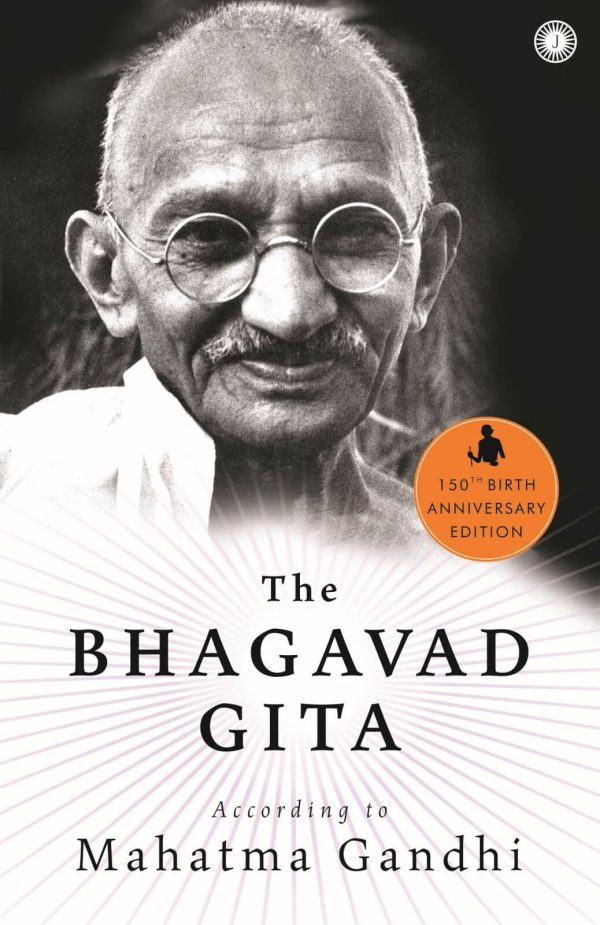
The Bhagavad Gita is perhaps the greatest work of practical Indian philosophy. Among the various interpretations of the Bhagavad Gita, the one by Mahatma Gandhi holds a unique position. In his own words, his interpretation of the Bhagavad Gita is designed for the common man – “who has little or no literary equipment, who has neither the time nor the desire to read the Gita in the original, and yet who stands in need of its support.”
Gandhi interpreted the Bhagavad Gita, which he regarded as a gospel of selfless action, over a period of nine months from February 24th to November 27th, 1926 at Satyagrah Ashram, Ahmedabad. The morning prayer meetings were followed by his discourses and discussions on the Bhagavad Gita.
Mahatma Gandhi
Mahatma Gandhi was a central figure in the history of modern India and one of the most influential leaders of the 20th century. He is best known for his leadership in the Indian independence movement and for his philosophy of non-violence (ahimsa) and truth (satya). Gandhi's methods of civil disobedience and non-violent resistance inspired movements for civil rights and freedom across the world, and his teachings continue to have a profound impact on global politics and social justice. Gandhi’s life and philosophy remind us that true freedom and justice are achieved through selflessness, integrity, and an unwavering commitment to truth.









Mahatma Gandhi
Jaico Publishing House