| Publisher |
Tulika Books |
| Publication Year |
2017 |
| ISBN-13 |
9788193926925 |
| ISBN-10 |
8193926927 |
| Binding |
Paperback |
| Number of Pages |
124 Pages |
| Language |
(English) |
| Weight (grms) |
363 |
| Subject |
Indian History |
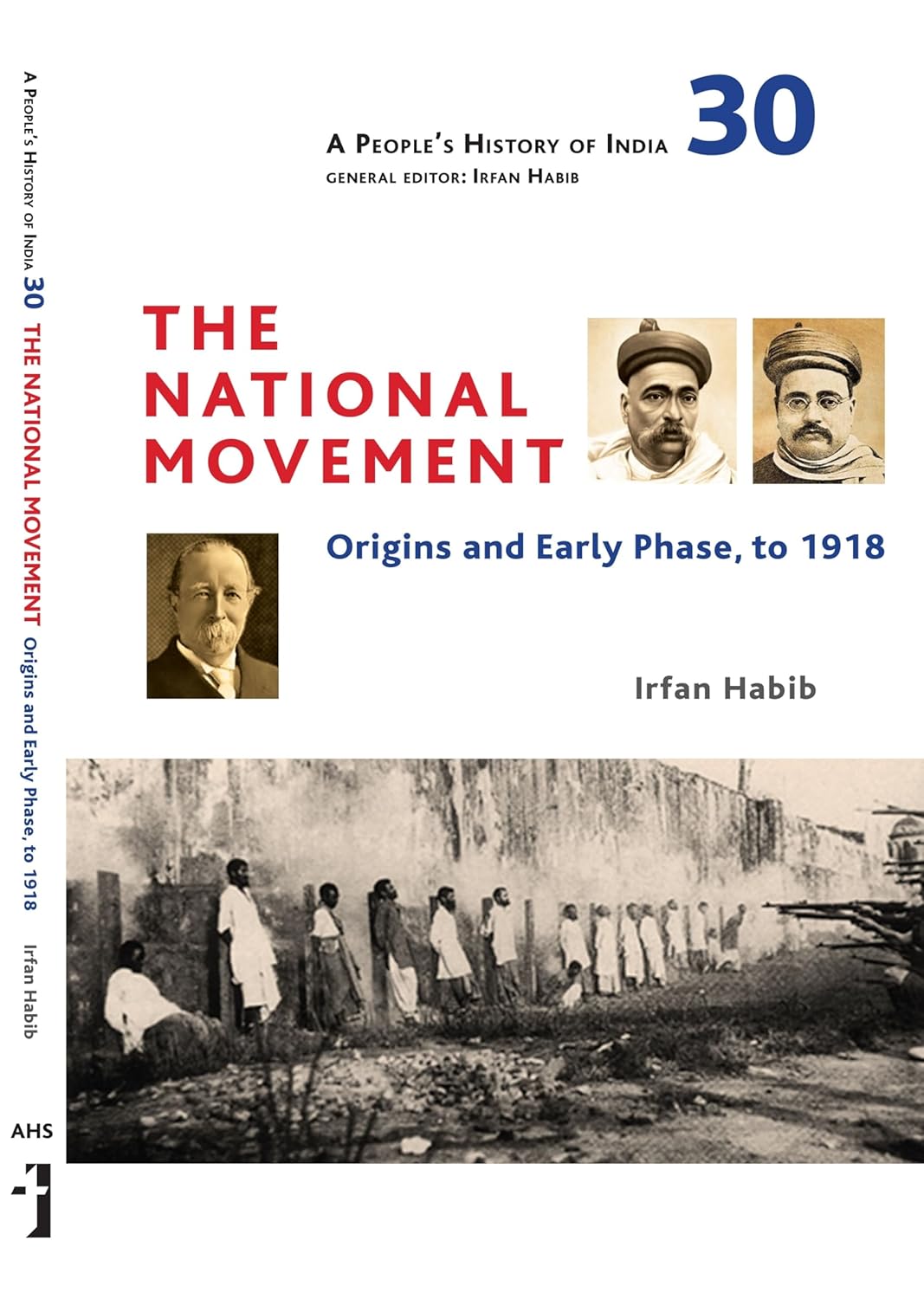
The National Movement: The First Phase, till 1918 deals with popular resistance to colonial rule, a special position being given to the Revolt of 1857–58, its nature and legacy; the rise of national consciousness, and the factors leading to it; the movement for social reform and political awakening among the middle classes. It examines the critique of British rule by early economic nationalists as well as the foundation (in 1885), and development as a political party, of the Indian National Congress. It considers the rise of the Extremists (as against Moderates), describes the rise of communalism and the Partition of Bengal (1905), the opposition to it and the rift within the Congress, the rise of violence and the Ghadar movement (1913–15). It also considers the effect of British measures of 1909 and 1911 on the National Movement, the Congress–Muslim League Pact of 1916, the Home Rule Movement, and, finally, Gandhiji’s arrival and the agitations of 1917–18.The volume is authored by Irfan Habib, the general editor of the A People's History of India series.
Irfan Habib
Irfan Habib is an Indian historian of ancient and medieval period. He is known for his Marxist leanings and criticism of Hindu and Islamic fundamentalism. He attended the Aligarh Muslim University School and did his B.A. and M.A. in history from the same university where he was awarded a double first class. He later did his Ph.D. from New College, Oxford. He has been the recipient of many awards like The Watumull Prize in 1982. He was awarded the Padma Bhushan in 2005.



Irfan Habib
Tulika Books